Charlie Goodman identified a dozen or so “spot plays,” small chart formations that tell you something useful about what the market is about to do. Here are two I remember well: the Pigtail and the Weak Sister.
Charlie and Point & Figure Charts
Charlie used Point & Figure charts to enter a market, mostly to define a Dagger. All Goodman students know a Dagger is a 1-2-3 at some price level! He was a big fan of P & F charts, and I’ve often thought that if I had my trading career to do over, I would use them exclusively… I’m 75. Oops, too late!
Charlie loaned me a two-book course on Point & Figure charts a few times and admonished me to take extremely good care of them while in my possession. “I bought them from the author in the late 1940s and paid $500. They aren’t numbered, but I believe he only did 50 of them.” I can see them clearly, bound in soft faux-leather maroon binders. I once saw what looked like a set on Abe Books for $1,500. I thought about it for a day and decided I’d go ahead and purchase them. I was fairly sure they were the same books, perhaps even Charlie’s copies, which had priceless notes and annotations in them. I went back online to make the purchase, and they were gone. I still look occasionally but have never seen them again.
SIDEBAR: Another series that I would even today pay up for is the complete bound volumes (12 of them, six years) of the Bruce Gould on Commodities newsletters Mr. Gould wrote from 1976 to 1982. Besides Charlie, Bruce Gould is my only market hero. I’ve seen odd volumes for sale (I have three of them) but never a complete set. I owned two sets over the years. The first set I mistakenly left behind in Hawaii; the second set disappeared when Jim Bickford died unexpectedly and everything in his apartment disappeared.
Setup or Spot Play?
Charlie also had a dozen or so “formations,” or as we later called them, “spot plays” (after a term used in greyhound racing handicapping), that he had found while bathtubbing P & F charts. Of course, some he may have picked up from his collection of rare market books and monographs. He promised these to me when he went hither to trade harp futures, but it did not happen that way. Another story for another time.
Generally, the difference between a Goodman Setup and a Spot Play is that the Setup is more qualified, takes the trader further down the Goodman Smoothie and uses more overlays. One of these was the “Hidden-X/Hidden-O,” which I discussed briefly in Charlie’s Secret Notebooks. I am sure time has erased several of those spot plays from my memory. Or perhaps it was all those Heinekens I drank in my 20s and 30s that erased them? I think I’ll blame time, although I no longer drink Heinekens!
Today I will show you two I do remember: the Pigtail and the Weak Sister.
The Pigtail
Every Goodman student knows that a grouping of three bars in a parallelogram means a 1-2-3 exists at a lower time frame. If there are 4 or 5 bars in the grouping, Eureka! It is almost certainly at least a basic Setup! Drop down and take a peek!
All charts are courtesy of Investing.com.
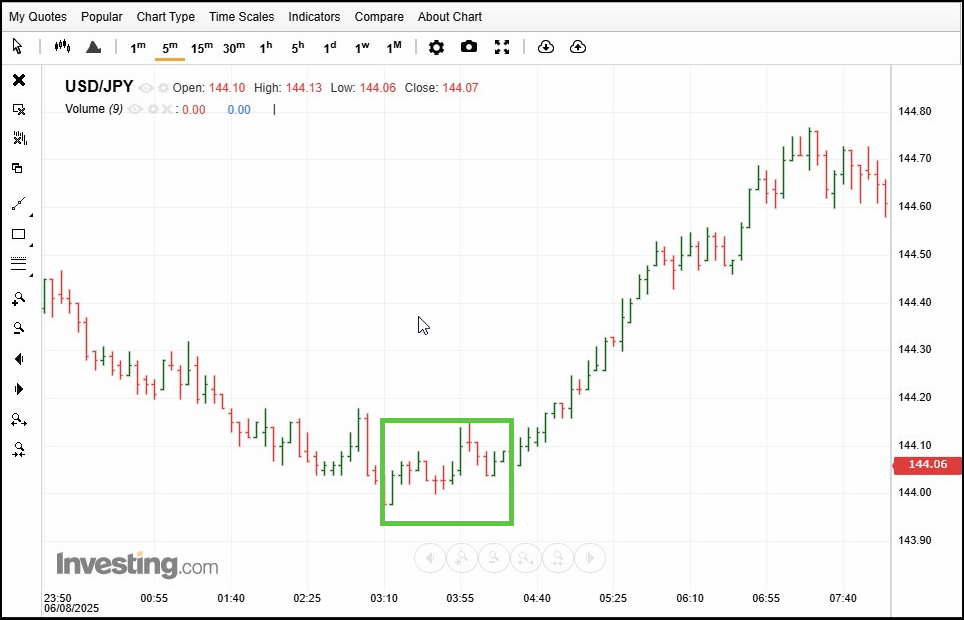
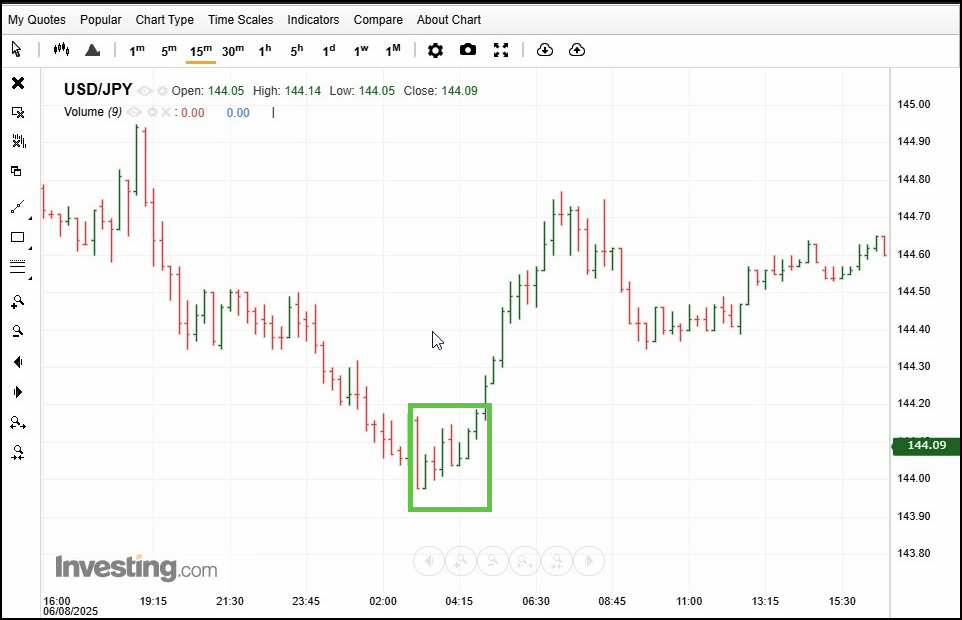
A Pigtail, as a Spot Play, is a grouping which occurs at the end of a long solo (1) bar or a very sharp advance or decline. Per Charlie it is even stronger, at least in the short term. The buyers or sellers have been suddenly brought to a stop, and the sellers or buyers are gathering for the kill (reversal).

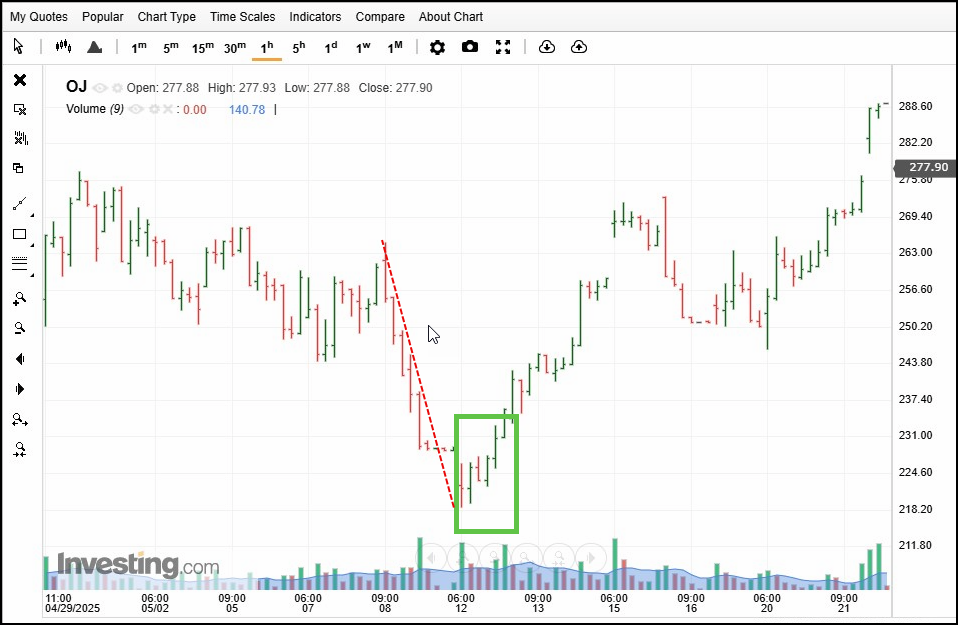
Occasionally (not often) the Pigtail will kick in a Setup at the next higher time frame. It acts as a fire starter (2). In such instances your 10-12 pip risk can turn into a 100+ pip Line! I dream about such opportunities and relish the rare occasion they occur. What’s to argue about a 15:1 hit?
The Weak Sister
When the market broke out of a 1-2-3 or a Setup, Charlie would say, “Well, dad, that is either a brave soldier leading the charge or some poor sucker stuck on the top of a flagpole!” It was time to watch out for the occurrence of the ugly Weak Sister!
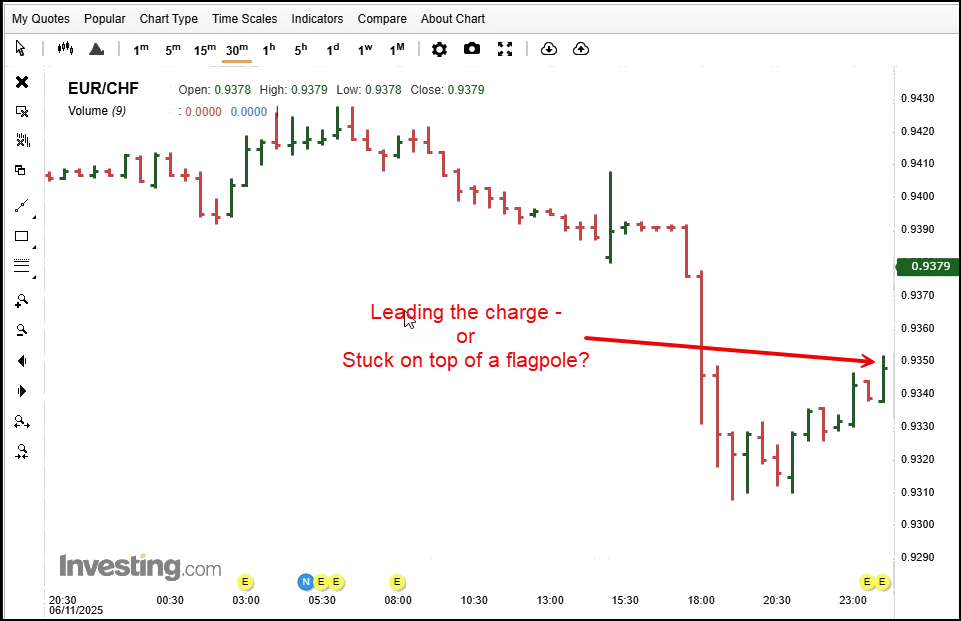
A Weak Sister is a small 1-2-3 in the opposite direction of the Setup breakout. It may portend trouble and the failure of the Setup.
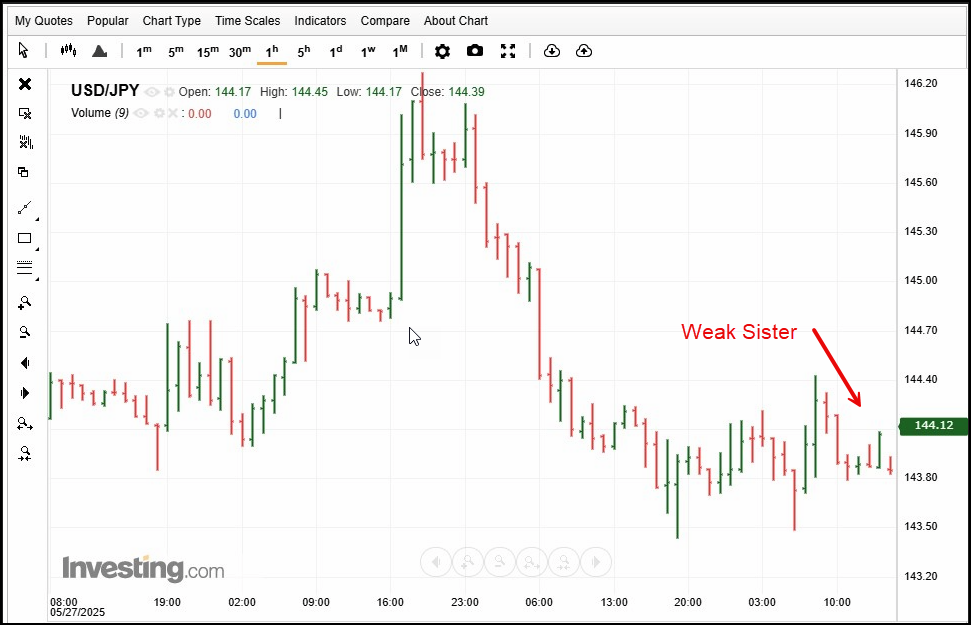
Charlie said, “A Setup is set up to go!” A good Setup will usually see two or three strong bull bars after the Dagger.
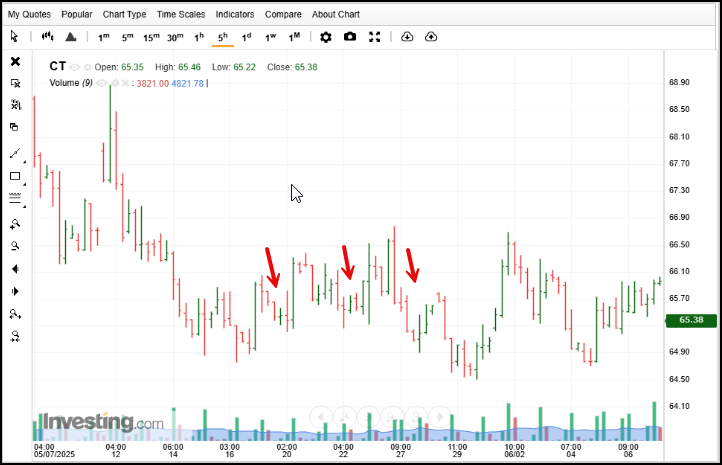
Above, the market continues to repropagate with Weak Sisters. Frustrating! One may need other overlays to qualify such a chart, or just move on. But look! A Molokai finally builds!
In a future 50YearTrader post I will show you a little Spot Play I developed called the Reverse Pigtail. But being able to see the Pigtail will help you identify and understand the Reverse Pigtail better.
(1) A “solo bar” is a relatively long bar with white space on both sides.
(2) “FireStarter” is also used in Goodman to indicate a full trading strategy using short-term charts.
This post is educational commentary on chart structure using Goodman Wave Theory. It is not investment advice. Trading futures and FX involves substantial risk of loss.
Good Trading!
Michael Duane Archer
Related Reading
- Reverse Pigtail: Charlie’s Lesson on Chart Formations
- The Goodman Wave Theory Paradigm in a Nutshell
- Second Chance Entry in Goodman Wave Theory (Don’t Panic)
Keep Learning the Goodman Way
If this article was useful, these are the next steps:
- The Method: propagation, intersection and the 3-C Principle, drawn plate by plate.
- The Goodman Library: the books, from Goodman for Grasshoppers to The Goodman 6 & 6.
- The Trader’s Playbook: the Molokai setup in one printed, numbered volume.
- Mentoring: work one-on-one with the authors.