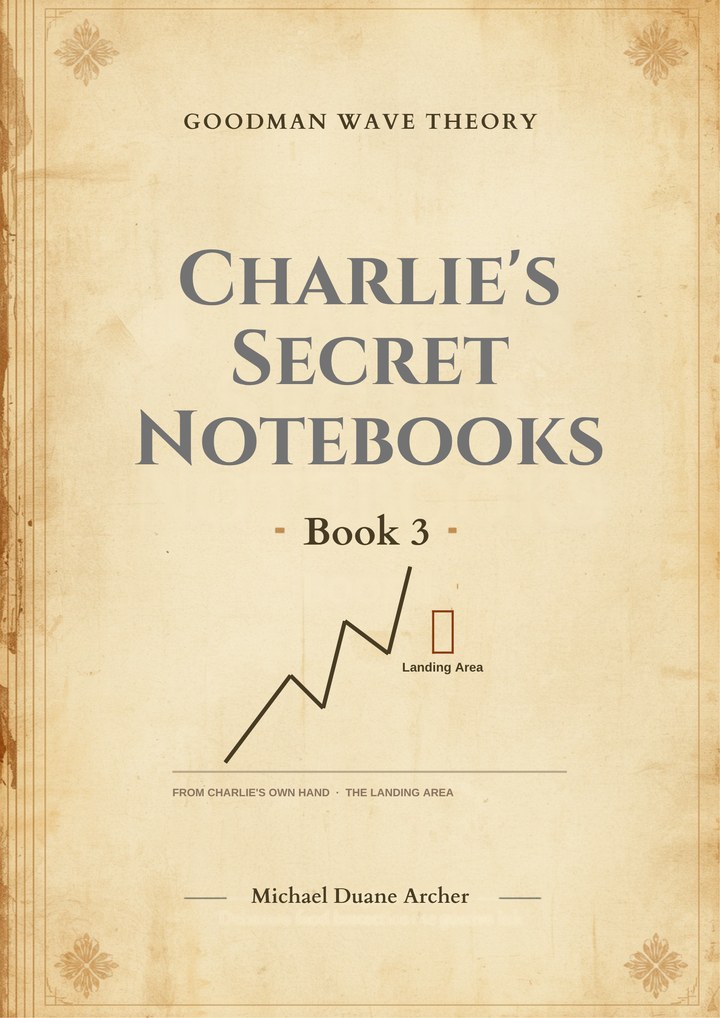
Charlie Goodman never wrote a book. He wrote to his students, drew on cocktail napkins, and made Michael Duane Archer read a chart until he saw it. These nine are what came of that — typed up, tested, and priced so you can start with one and read your way to all of them.
Where to start
You don’t need all nine to trade one setup well. You need the right one, in the right order. Here is the order the books themselves recommend — each one tells you what to read next.
Each arrow is printed in the books themselves: every one names the title that comes before it and the title that comes after. The Trader’s Playbook sits outside the ladder: printed, numbered, and its own thing.
The capstone
And then there is the Playbook
The nine books above are the method written down over twenty-three years. The Trader’s Playbook is what fifty years in the markets distilled to: one setup, start to finish, by both authors together — the only book here with Archer and Ahmed on the same title page.
It does not replace the ladder. It is what the ladder was climbing toward, and it is the only volume that exists on paper: printed, numbered, signed, one hundred copies.
Printed · 100 copies · includes a 60-minute consultation
The whole Library
Buy the ladder, not the rungs
Grasshoppers, Over the Over, 3S, Charlie’s Secret Notebooks 1–3, both parts of the CODEX, and the Goodman 6 & 6. All nine titles, watermarked to you and sent within 48 hours.
Bought one at a time, these nine run $2,822. The Library is one order, one price, no missing rung.
Watermarked PDF · nine books · sent within 48 hours
Foundations
Start here if you are new to Goodman, or if you already trade it and want the complete reference on your desk.
Entry · $97
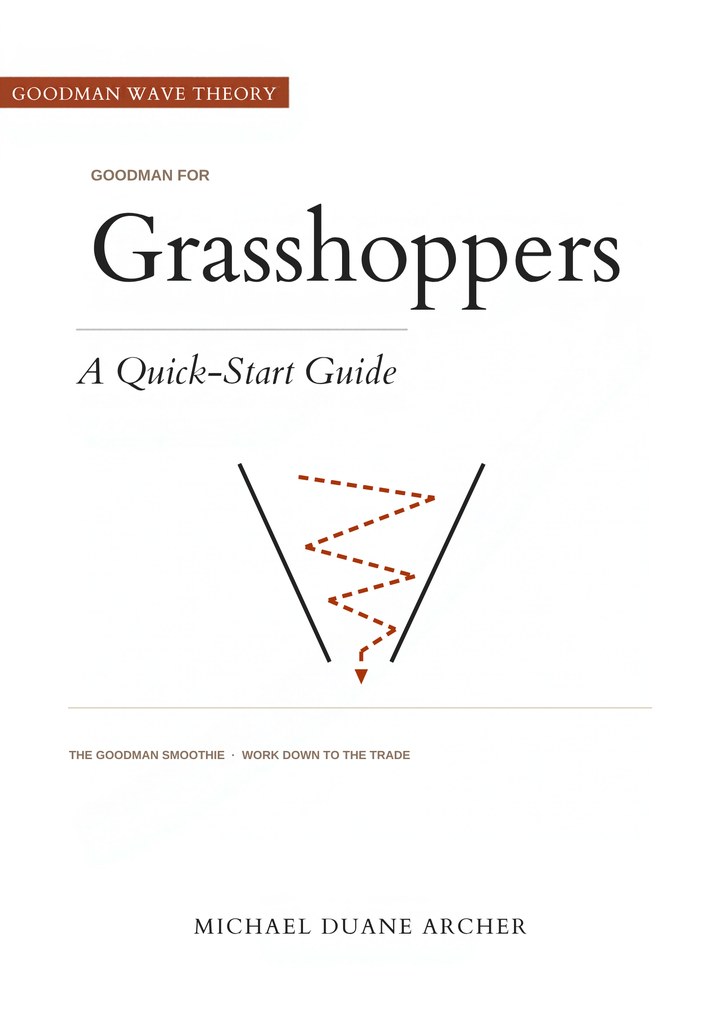
Goodman for Grasshoppers
Five parts, One honest rule the book repeats twice: don’t judge the method by fewer than ten trades. This is the version of Goodman you can start trading this week, on a micro-lot account, with no prior theory required.
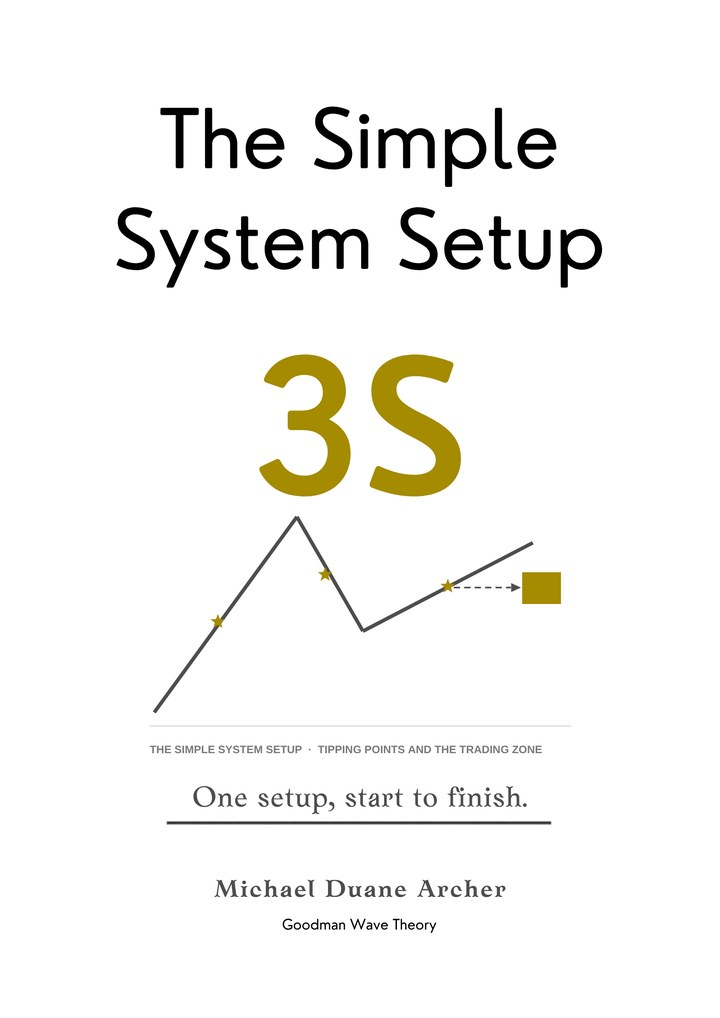
Written for a trader on a sub-daily chart, where Charlie’s longhand analysis stops being practical. 3S resolves the Goodman Knot — two swings tangled at the same Tipping Point — into one clean box you can trade in either direction.
“You will learn much more from the losers than the winners.”
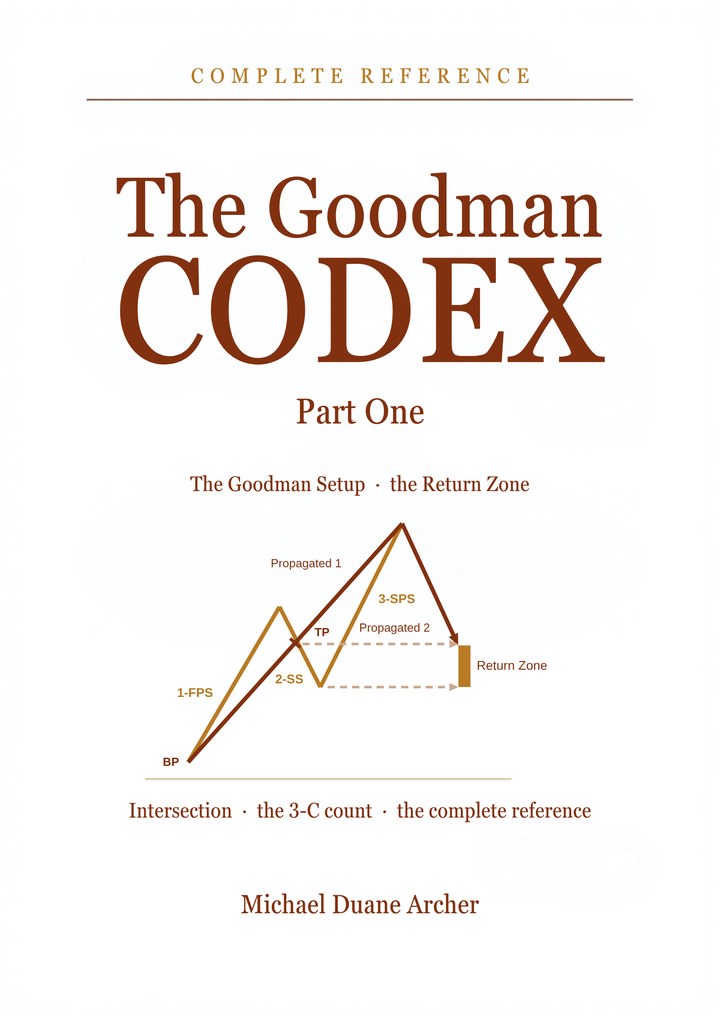
Twenty-three years of chart studies (2003–2025) and the complete written Trading Goodman mentoring course, in one reference. If a shorter book in this Library tells you to go deeper, this is where it sends you.
“A Goodman Wave is a market 1-2-3 that propagates more than one time.”
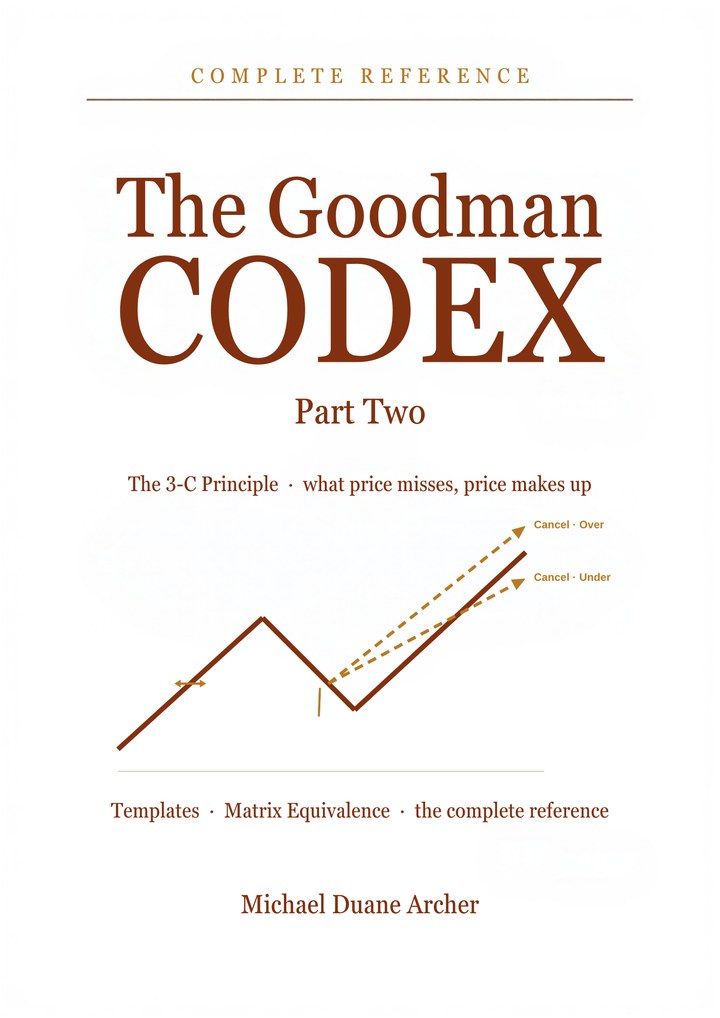
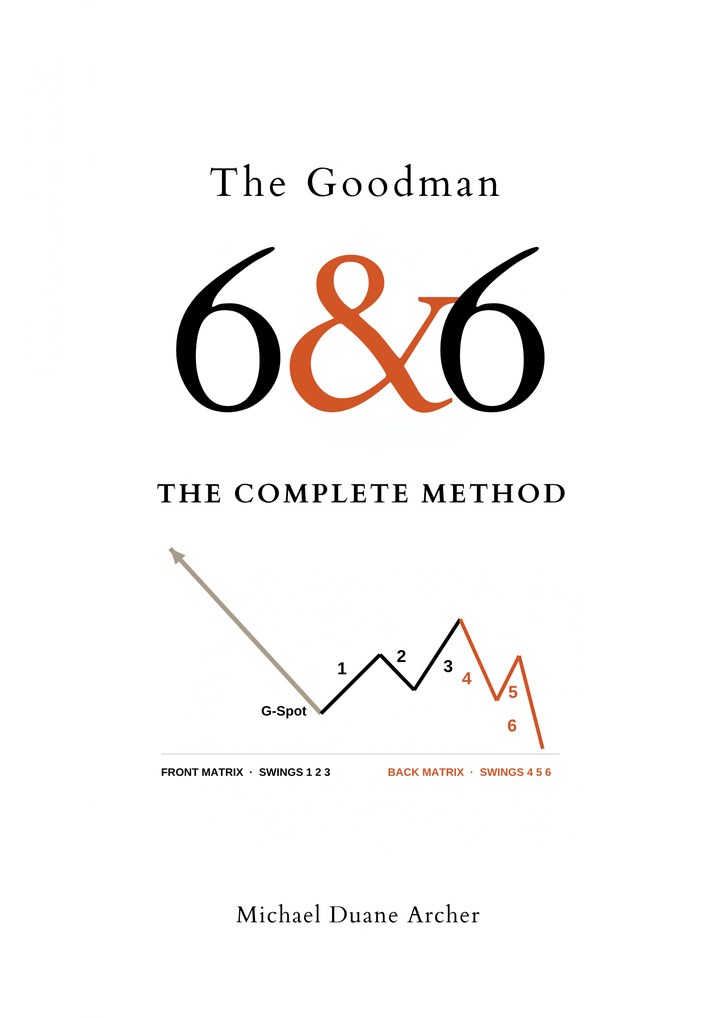
The Goodman Theory Letter, the Goodman Reader, and the full 6 & 6 Setup manual, continuing directly from Part One. “A novice can begin with very little study,” the book says of the 6 & 6 — and then proves it.
“A novice can begin using Goodman Wave Theory with very little study.”
Six swings, six parameters, no propagation — Charlie’s own description of the setup this book is built around. When the first edition sold, the author promised its 50 buyers he’d tell them himself if anything changed. That is the kind of book this is.
“Six formations, six parameters, no propagation.” — Charlie Goodman
The Jumbo measures 200. The 1-2-3 off its Ending Point has propagated twice; the last third swing now ends 60 above the Jumbo EP. Do you keep watching this chart?
Show the answer
No. 60 is 30% of the Jumbo, and once the propagated ‘3’ passes 25% of the Jumbo the chart is a bust from a Molokai perspective — move on to another Jumbo. A setup inside 25% has a second test to pass as well: its Under count must stay short of the Jumbo’s Tipping Point, so that you hold a decent profit by the time price reaches the Jumbo’s halfway mark.
The Trader’s Playbook, p. 66 (Fig. 77), pp. 57, 59, 103
Source and technique
For the trader who already has the Foundations and wants Charlie’s own working notes, plus the one skill most Goodman traders skip.
Technique · $147
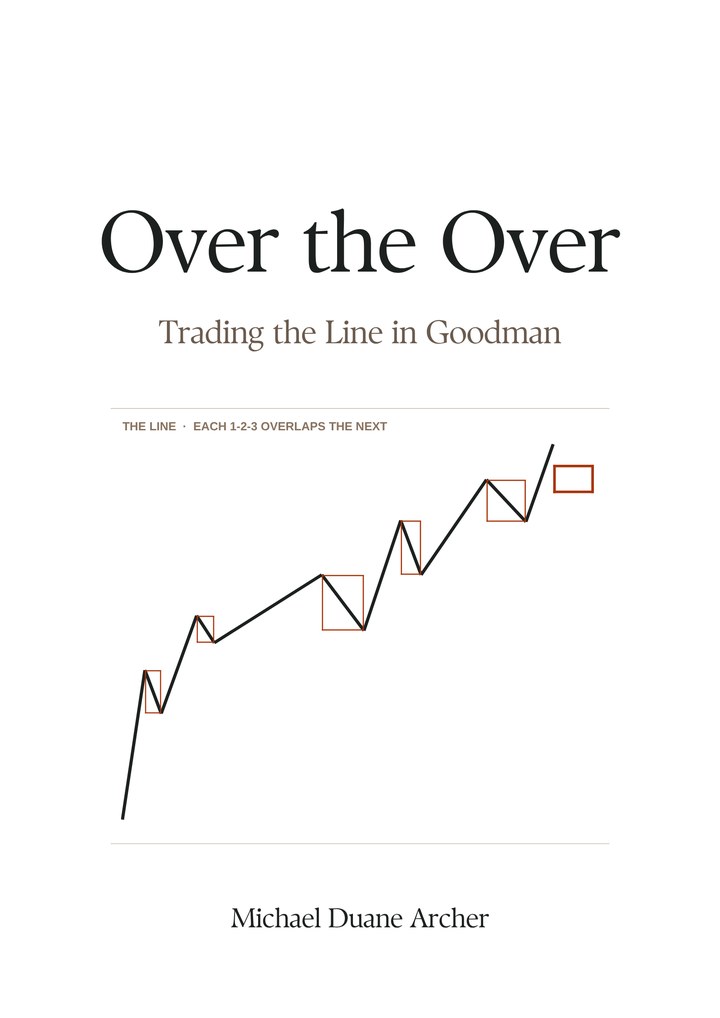
Over the Over
Every Goodman trader learns to take profit at the Over count. Few learn to keep going past it. This book is the one-in-ten trade that, done right, pays for the other nine — and the discipline of trailing a stop instead of taking a target.
“You cannot catch a 200 piper if you always take the 50 pipers.”
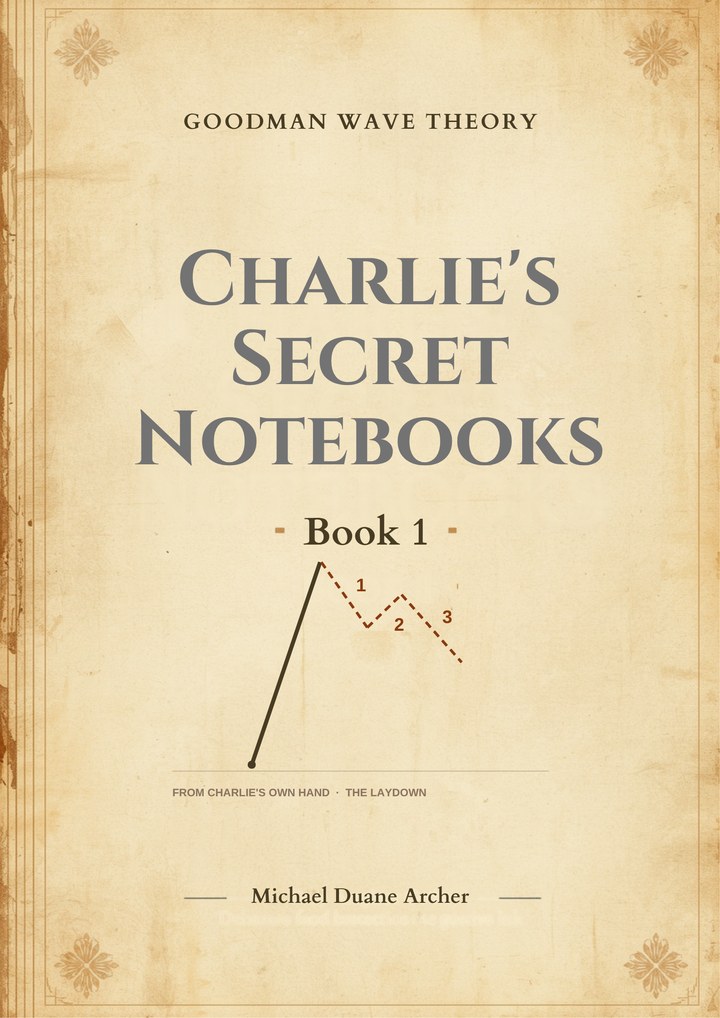
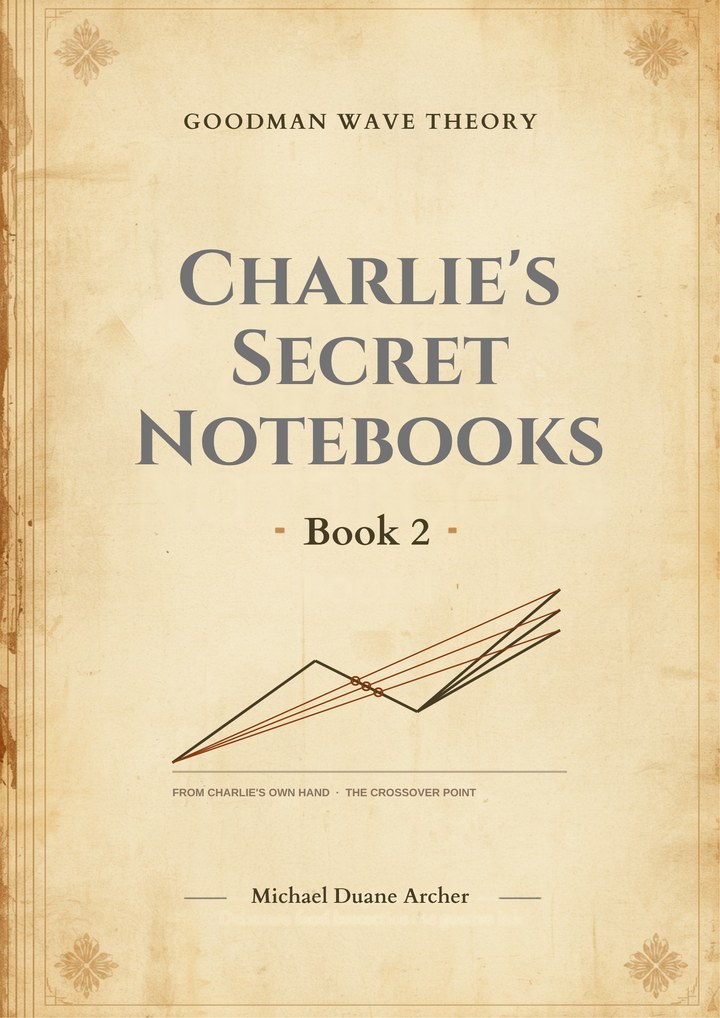
Twenty-seven standard techniques in Book 1, then two books of advanced ones — Bickford Bars, the Descartes Index, the Runaway 3-C — that the author calls, without ceremony, “in all likelihood my last word on things Goodman.” Read them in order; each one says so itself.
The third swing has passed the Exceed, passed the marked Over count, and keeps running. What is this now called, and what does the whole drawing become one scale up?
Show the answer
It is a Breakaway Swing — a 1-2-3 reverts to being a simple swing when its SPS breaks away. Zoom out and the 1-2-3, its propagated ‘2’ and the breakaway leg are a single swing of a much larger matrix: the next Jumbo. To count it, mark the Over, measure from the setup’s SPS EP back to the FPS BP, and add that length past the Over. Repeat the addition and you have the Goodman Levels.
The Trader’s Playbook, pp. 27–28, 123 · Notebooks Book 1, pp. 69, 72–73
Exercise
Six bars, no progress
Price has wandered between the Test and the Exceed for six bars. What has happened?
Show the answer
Nothing. Until one of those two levels is breached, no new swing component has formed — this is Time Hash, and it is to be watched through rather than traded. Charlie’s instruction was blunt: watch the Test and Exceed points; until they are breached nothing of importance has occurred. See Over the Over.
Not sure which one?
Every book page has a “who it’s for” section written from the book’s own introduction — not marketing copy, the author’s actual description of the reader he had in mind. And every single-book order can be upgraded to the Library within 30 days: write to us and we’ll credit what you paid.
Buying & delivery
How it works
Write to us and we send the payment link for the title you want. Your copy is then watermarked to your name and delivered within 48 hours.
Charlie wrote to his students. We do the same: a new plate, a chart worth looking at, a note when a book is finished. No schedule, no sequence, no selling to you every Tuesday. Leave when you like.
We keep the list ourselves. It is never sold, rented or shared.