Sometime in the late 1960s or early 1970s Playboy magazine ran a story by Jean Shepherd, “Lost at C,” based on an experience he had as a child in the late 1940s or early 1950s. Shepherd wrote several childhood reminiscences for the magazine; they were all entertaining, but I enjoyed “Lost at C” the best.
The story is about a boy in school who is not good at math. He is called on to solve a difficult problem for “C” in algebra class. Clueless, he pulls a number out of thin air and it is the correct answer! Suddenly he is the class genius. Shepherd’s anthology A Fistful of Fig Newtons has this story and many of the others. If you are a Boomer, especially an early Boomer, you will find the stories a delightful trip down memory lane.
Lost Beyond ‘C’
In Goodman there is the famous Goodman Knot, where the trader often becomes lost beyond the “C” point in the propagation. Goodman Wave Theory attempts to “resolve the Knot” with the three basic Goodman principles and Overlays. The problem is not totally solved thereby, and you can become the class genius if you can do it better!
I will endeavor to explain the Goodman Knot as Charlie explained it to me. I consider it part of Mr. Goodman’s genius that he could formulate it in such a clear-cut, simple fashion. It is a testament to the logical structure of Goodman Wave Theory that the market’s indeterminacy can be stripped down to a single, clearly defined problem. In science, defining the problem is often more than half the battle.
Starting With the First Two Swings
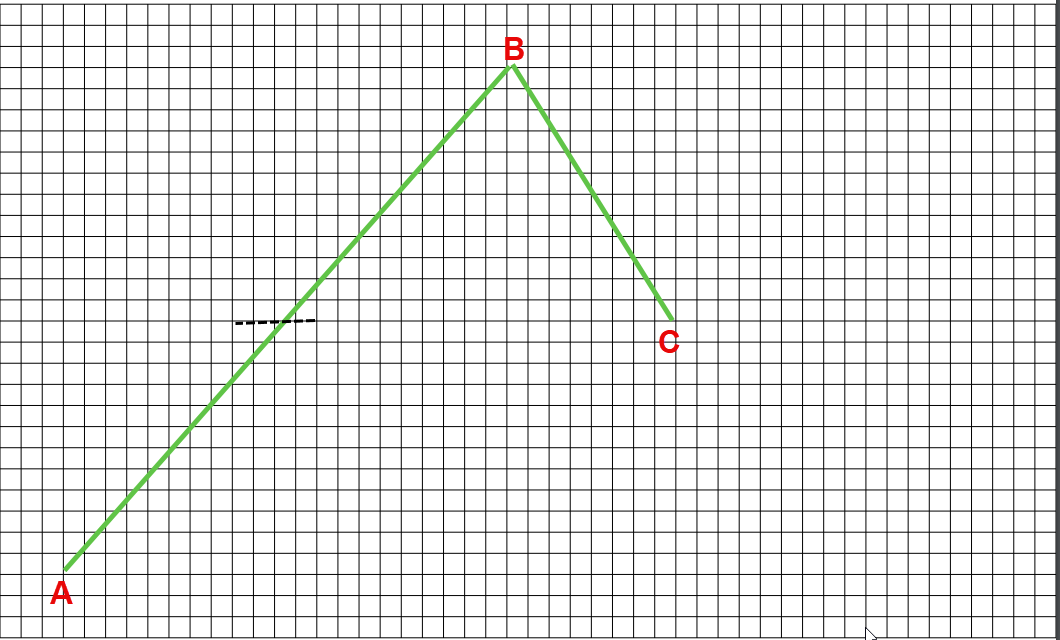
We start with the first two swings of a 1-2-3 matrix or a propagation. First, a simple 1-2-3 Matrix:
And in a complex propagation, 1-2-3 -> 1-2:
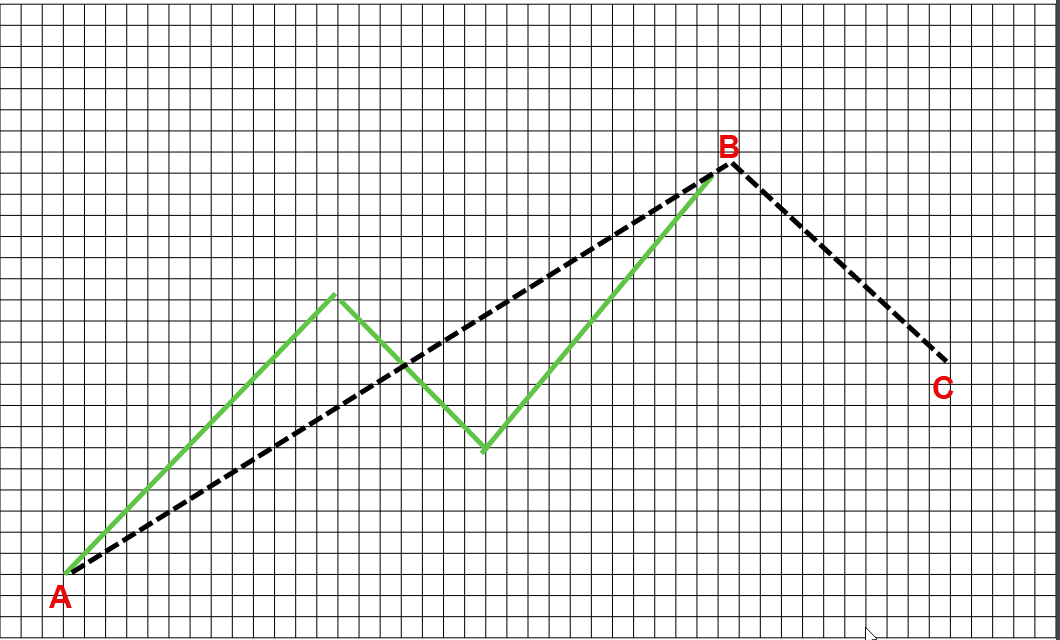
50YearTrader Tip: Remember that in Goodman Wave Theory the trade is always for the propagated 3-swing: 1-2-3 -> 1-2, and the trade is for the propagated 3 swing.
The eternal Goodman trader’s question is this: Where is “C,” the Ending Point of the 2 swing? If we know where it is pricewise, we can buy or sell with much more confidence to trade for the 3-swing.
The Goodman Knot
Past “C” the market begins to move again. This is in fact a Goodman Knot. Which direction is the current propagation?
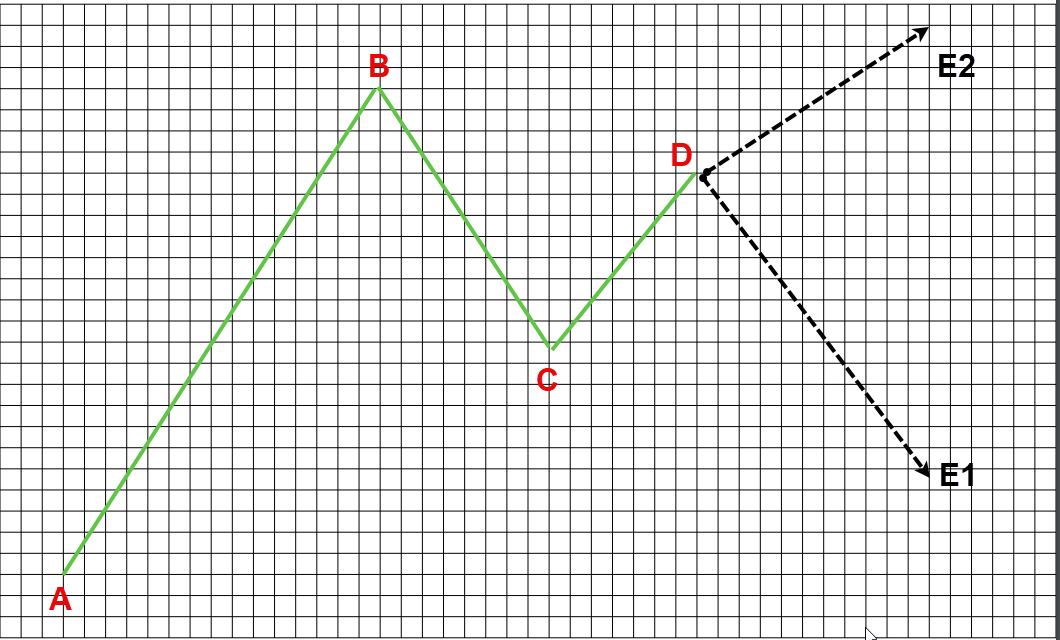
Prices exceeding “B” indicate an upward propagation. Prices exceeding “C” indicate a downward propagation. The indeterminacy of the market in a nutshell!
50YearTrader Tip: If you do not see a propagation on a chart, it is almost certainly Knotted. Ask: What does it need pricewise to propagate in one direction or the other?
Again, GWT uses its principles (Propagation, Intersection, 3-C) and Overlays to “resolve the Knot” and the subsequent direction of prices.
The Goodman 3-S Setup
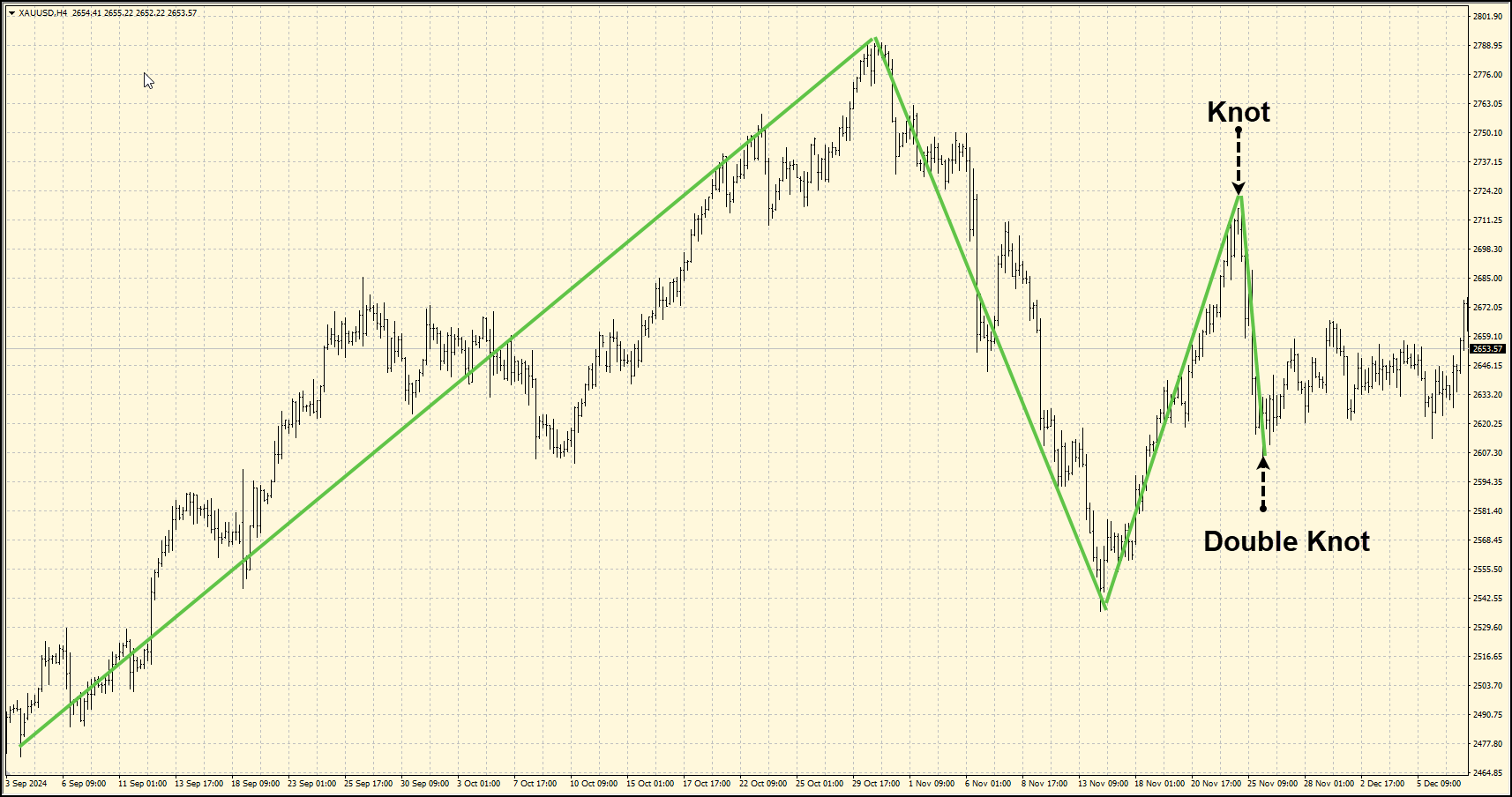
The Goodman 3-S Setup is based on a Double Knot. Perhaps that is a subject for a future post.
This post is educational commentary. It is not investment advice. Trading futures and FX involves substantial risk of loss.
Good Trading!
Michael Duane Archer
Related Reading
- Chart Patterns: Why Head and Shoulders Always Seem to Work
- Trading the Goodman Line: The 10-4-1 Rule Explained
- Goodmanisms: Charlie Goodman’s Sayings on Trading, Explained
Keep Learning the Goodman Way
If this article was useful, these are the next steps:
- The Method: propagation, intersection and the 3-C Principle, drawn plate by plate.
- The Goodman Library: the books, from Goodman for Grasshoppers to The Goodman 6 & 6.
- The Trader’s Playbook: the Molokai setup in one printed, numbered volume.
- Mentoring: work one-on-one with the authors.